
Overview
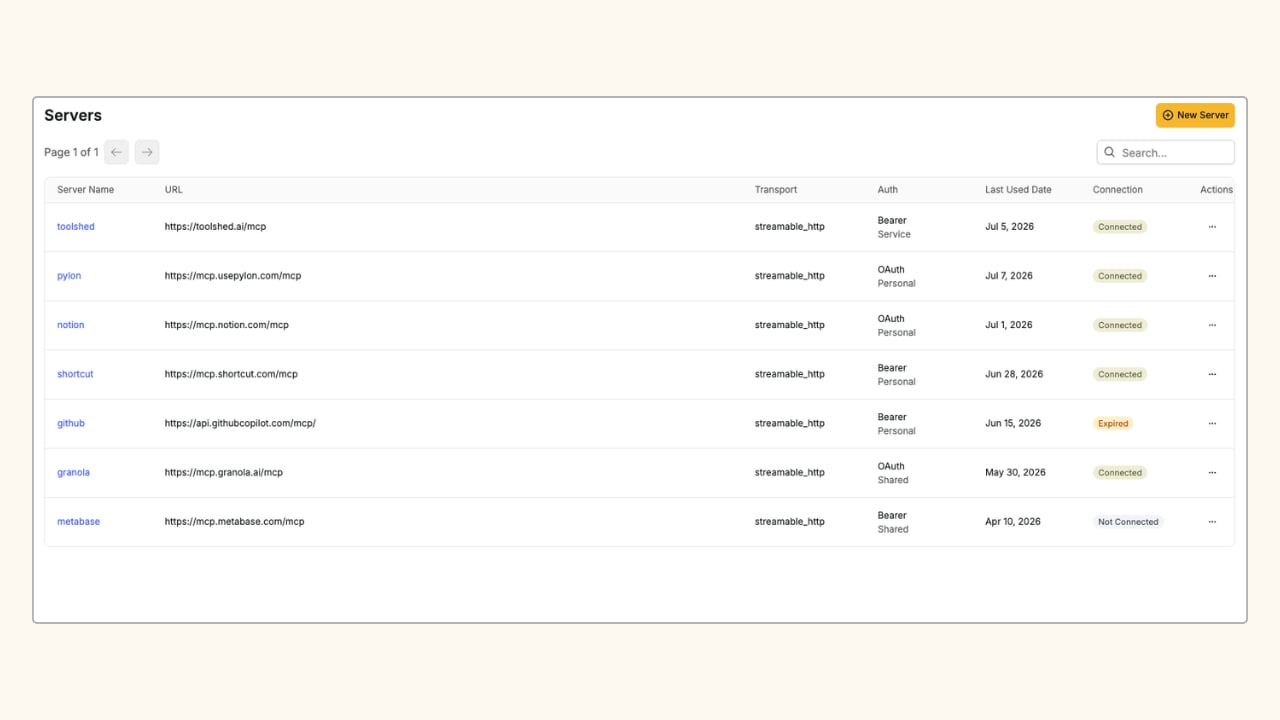
- Servers & Tools: the upstream MCP services you register with the gateway, and the individual tools each one exposes
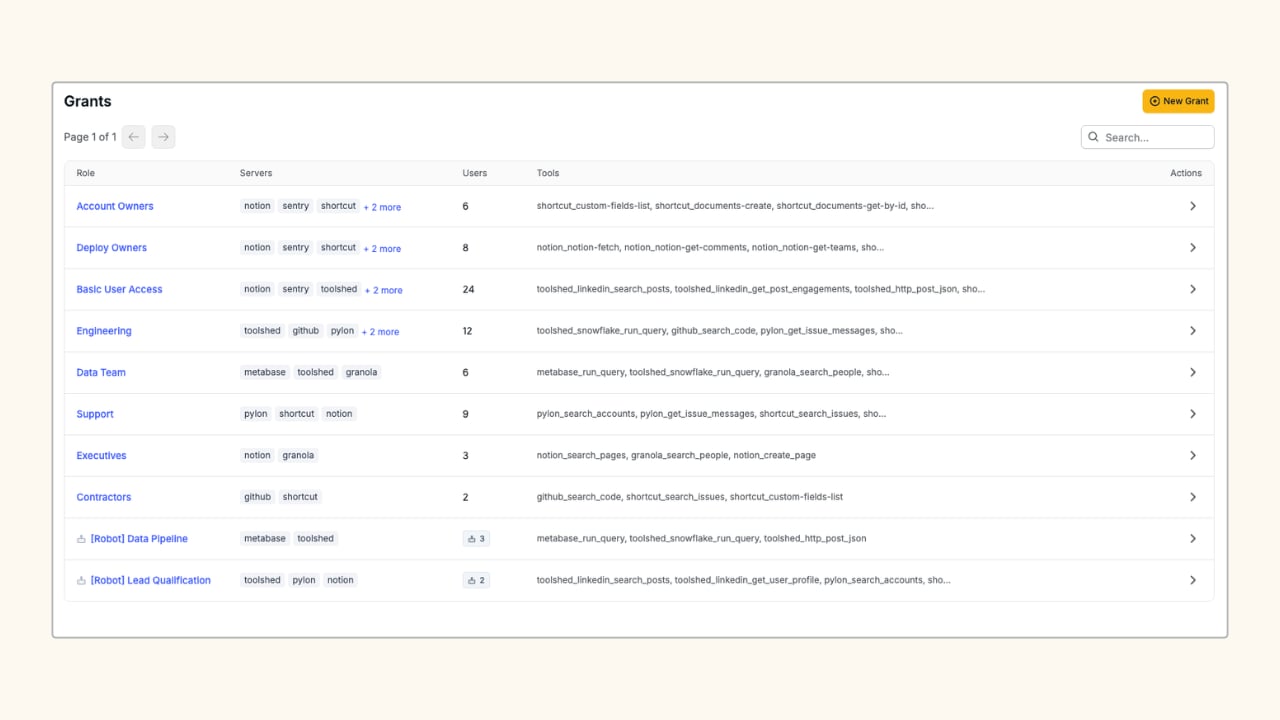
- Access Control: grants that scope which tools a user or robot can call
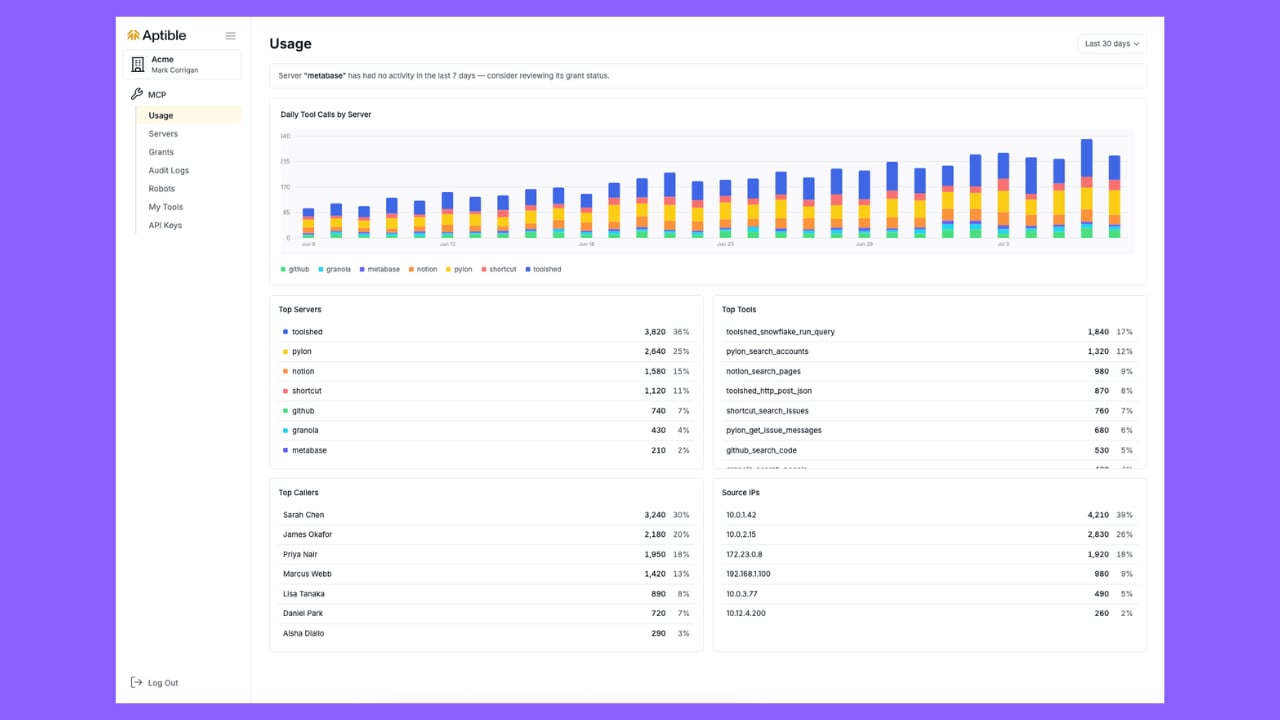
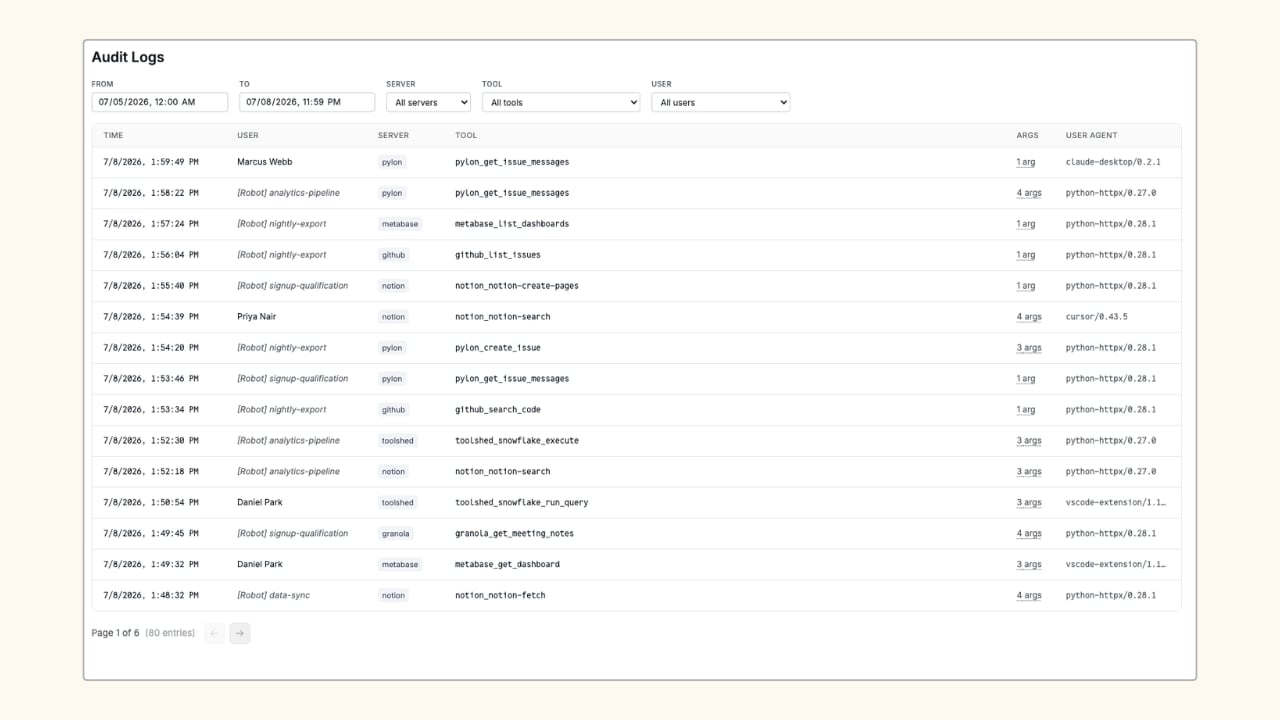
- Audit Logging: a full record of every tool call routed through the gateway
What is MCP?
Model Context Protocol (MCP) is an open standard that lets AI agents discover and call external tools at runtime, such as reading files, querying a database, creating a GitHub issue, or searching your knowledge base. Instead of hardcoding integrations into your AI client, MCP lets any compatible client connect to any compatible server using a common protocol. The problem is that MCP servers run with real credentials and can take real actions. Without a control layer, there is no way to enforce who can call what, no record of what happened, and no way to prevent a user or agent from wiring in a server your organization never approved. An unmanaged MCP setup also has a meaningful prompt injection risk: a malicious tool description or server response can instruct an agent to call tools outside its intended scope. The MCP Gateway addresses these problems at the proxy layer, where restricted tools are structurally unavailable, not just hidden from the client’s view.Features
Security Model
The MCP Gateway is built on the principle that AI agents should not have more access than they need and that every action they take should be recorded.Access Control
Audit Logging
Works with any MCP-compatible client