

HIPAA-compliant infrastructure that enforces the controls, not just the paperwork

HITRUST R2-certified infrastructure with encryption, access controls, and audit logging enforced by default. BAA included with every plan.

HIPAA-compliant infrastructure that enforces the controls, not just the paperwork

HITRUST R2-certified infrastructure with encryption, access controls, and audit logging enforced by default. BAA included with every plan.

"The motivation for working with Aptible was to have a HIPAA compliant platform to cross the t's and dot the i's in terms of HIPAA compliance, while also facilitating sales by being able to point to scalability, security, and ease of use."

Read Case Study

The real problem with HIPAA hosting

The BAA is the easiest part. The controls are where most teams fall short.

Healthcare teams run into HIPAA compliance as a specific, concrete problem, usually when a deal, an audit, or a new customer requirement makes the gap impossible to ignore.

You got a BAA from your current host and assumed it meant you were covered

A BAA documents shared responsibility for PHI. It doesn't create encryption, enforce isolation, or generate audit trails. When a buyer or auditor asks how PHI is protected in your environment, the BAA doesn't answer that question. The controls do, and most hosting providers don't enforce them.

You're on Heroku or Render and a healthcare buyer just asked for evidence of HIPAA compliance

General-purpose platforms aren't designed for regulated workloads. They'll sign a BAA, but the underlying infrastructure shares tenancy, has limited audit logging, and puts compliance documentation on you. When a serious healthcare buyer sends a security questionnaire, the answers aren't there.

You built on AWS and compliance keeps slipping as the system grows

The initial setup was careful. IAM was scoped. Logging was configured. But as new services, engineers, and environments were added, policies widened, logging became inconsistent, and isolation assumptions quietly broke. The drift is invisible until an auditor or enterprise security team starts asking questions.

You're approaching a HITRUST or SOC 2 assessment and you're not confident the infrastructure will hold up

Compliance frameworks require documented, attributable evidence: who had access, what changed, when it happened. If that evidence wasn't captured continuously, you can't reconstruct it. Gaps in audit history become findings, and findings delay or block certification.

Why compliance falls through

Most infrastructure puts compliance responsibility on the team, not the platform

Why compliance falls through

Most infrastructure puts compliance responsibility on the team, not the platform

Why compliance falls through

Most infrastructure puts compliance responsibility on the team, not the platform

A BAA is a contract, not a control

Signing a BAA with a hosting provider means they've agreed to protect PHI. It doesn't mean they've enforced encryption, isolation, or audit logging. Those controls depend on what the platform actually does by default, and on most platforms, the defaults aren't safe for regulated workloads. Teams assume the paperwork covers them until a buyer or auditor looks underneath it.

A BAA is a contract, not a control

Signing a BAA with a hosting provider means they've agreed to protect PHI. It doesn't mean they've enforced encryption, isolation, or audit logging. Those controls depend on what the platform actually does by default, and on most platforms, the defaults aren't safe for regulated workloads. Teams assume the paperwork covers them until a buyer or auditor looks underneath it.

AWS gives you flexibility, not safe defaults

Every HIPAA safeguard on AWS requires deliberate configuration: encryption, network isolation, access controls, log retention, key management. AWS makes all of it possible and none of it automatic. Teams moving fast skip steps that seem optional. The gaps compound, and nobody notices until a review.

AWS gives you flexibility, not safe defaults

Every HIPAA safeguard on AWS requires deliberate configuration: encryption, network isolation, access controls, log retention, key management. AWS makes all of it possible and none of it automatic. Teams moving fast skip steps that seem optional. The gaps compound, and nobody notices until a review.

Compliance evidence has to exist before it's needed

Audit trails don't exist retroactively. Access logs, deploy history, configuration changes: if the infrastructure wasn't capturing them from day one, they're gone. Most teams build evidence infrastructure after an audit requires it, at which point the cost in time and findings is already paid.

Compliance evidence has to exist before it's needed

Audit trails don't exist retroactively. Access logs, deploy history, configuration changes: if the infrastructure wasn't capturing them from day one, they're gone. Most teams build evidence infrastructure after an audit requires it, at which point the cost in time and findings is already paid.

For a full breakdown of what HIPAA hosting technically requires, including encryption standards, access controls, audit logging, and how to evaluate providers, see our HIPAA Hosting Technical Guide →

HITRUST R2 and control inheritance

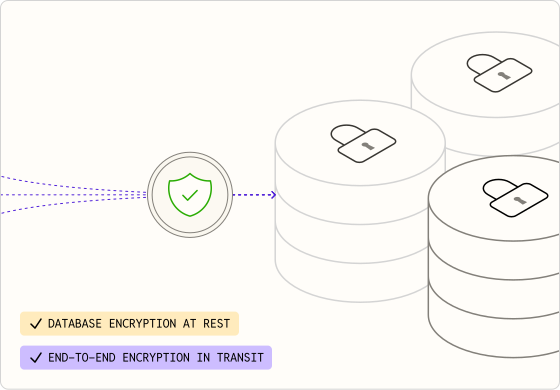
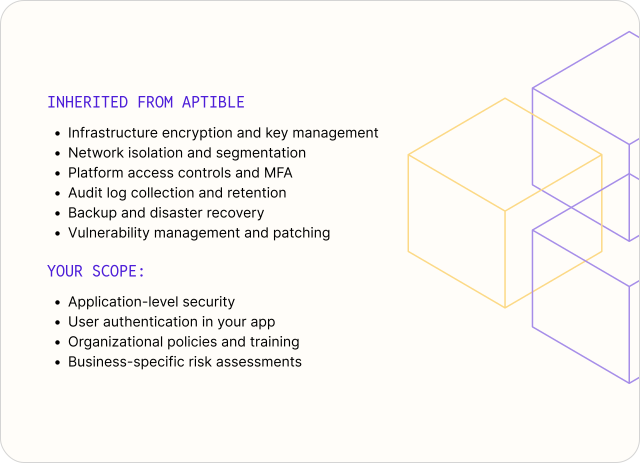
HITRUST assessments rely on control inheritance from infrastructure providers. Deploying directly on AWS provides limited inheritance from base cloud controls. Deploying on Aptible provides broader inheritance: encryption, access management, logging, network isolation, and backup procedures.

For teams preparing for HITRUST, this reduces assessment scope, lowers costs, and accelerates timelines.

Achieving hitrust on aptible
Use Cases

How healthcare teams use Aptible

Use Cases

How healthcare teams use Aptible

Establish compliant infrastructure before your first customer asks

Deploy on HITRUST R2-certified infrastructure from day one. The controls are already in place when a buyer's security team comes looking.

Pass the security review your enterprise deal requires

Pull audit logs, access records, and compliance documentation directly from the platform. Reviewers get attributable, complete answers, not a reconstruction effort.

Move off a general-purpose platform that can't answer compliance questions

Migrate from Heroku or Render onto infrastructure designed for regulated workloads. The security model is built in, not something you reassemble after the move.

Deploy AI features that touch PHI

Route LLM requests through Aptible AI Gateway to keep PHI inside controlled infrastructure. Logging, access controls, and PHI guardrails are enforced automatically.

aptible vs aws diy

What HIPAA-compliant deployment actually requires

Other hipaa hosts
DIy on aws

Time to first deploy

Minutes

Days

Weeks

Encryption

Enforced by default

Included

You configure

Audit logging

7-year retention, export-ready

Basic

CloudTrail + custom pipelines

Database management

Fully managed

Varies

RDS + ongoing maintenance

Access controls

Rolse-based, MFA enforced

Basic RBAC

IAM policies you maintain

Compliance evidence

Continuous, on demand

Manual

You compile it

HITRUST inheritance

Full R2

Varies

Limited

Developer experience

Git push, CLI, Terraform

Often dated

AWS Console

Developer experience

Aptible

Shared

Your team

Keep shipping. Safety happens automatically.

Deploy in minutes.

Keep shipping. Safety happens automatically.

Deploy in minutes.