
Build on infrastructure that was designed for regulated workloads

Aptible enforces security and compliance controls at the infrastructure layer, so founders get a foundation that's already set up correctly before they write a line of application code.

Build on infrastructure that was designed for regulated workloads

Aptible enforces security and compliance controls at the infrastructure layer, so founders get a foundation that's already set up correctly before they write a line of application code.

"Aptible is semi-magic. It would have taken me three months to build it myself... We were able to launch an alpha customer in three months with only three engineers. Two years later, we were able to pass HITRUST compliance. It wasn't that hard to pass largely due to Aptible."

the reality for founders

The compliance problem shows up at the worst possible moments

Most founders building regulated products don't run into HIPAA as an abstract concept. They run into it as a specific problem, usually when something is already on the line.

Your first healthcare customer wants to move forward, and just sent a security questionnaire

The questions seem reasonable: where does PHI live, who has access, how long are logs retained, what isolation exists between environments. But finding clean, defensible answers requires reconstructing decisions made months ago under time pressure. The questionnaire sits in someone's inbox while the deal waits.

You made early infrastructure decisions fast, and you're not sure they'll hold

Networking, isolation, access controls, and logging got set up to ship quickly. At the time, the priority was getting the product running, not anticipating what an auditor or enterprise security review would eventually ask. By the time those questions arrive, the architecture is already in production and harder to change.

Compliance knowledge lives in one person's head

One engineer (often whoever built the initial infrastructure) understands why certain decisions were made and how access actually works. That knowledge isn't documented, it isn't enforced automatically, and it doesn't transfer cleanly as the team grows. Compliance posture starts to drift the moment a second engineer touches the system.

You want to add AI features but aren't sure how to do it safely

LLMs can meaningfully improve your product. But sending PHI to a model input without a BAA, or letting developer tooling touch production data, creates exposure that won't be visible until someone asks the right question. The easy path and the compliant path are often different, and it's not always obvious which is which.

Why founders get stuck

General-purpose infrastructure wasn't built for regulated workloads
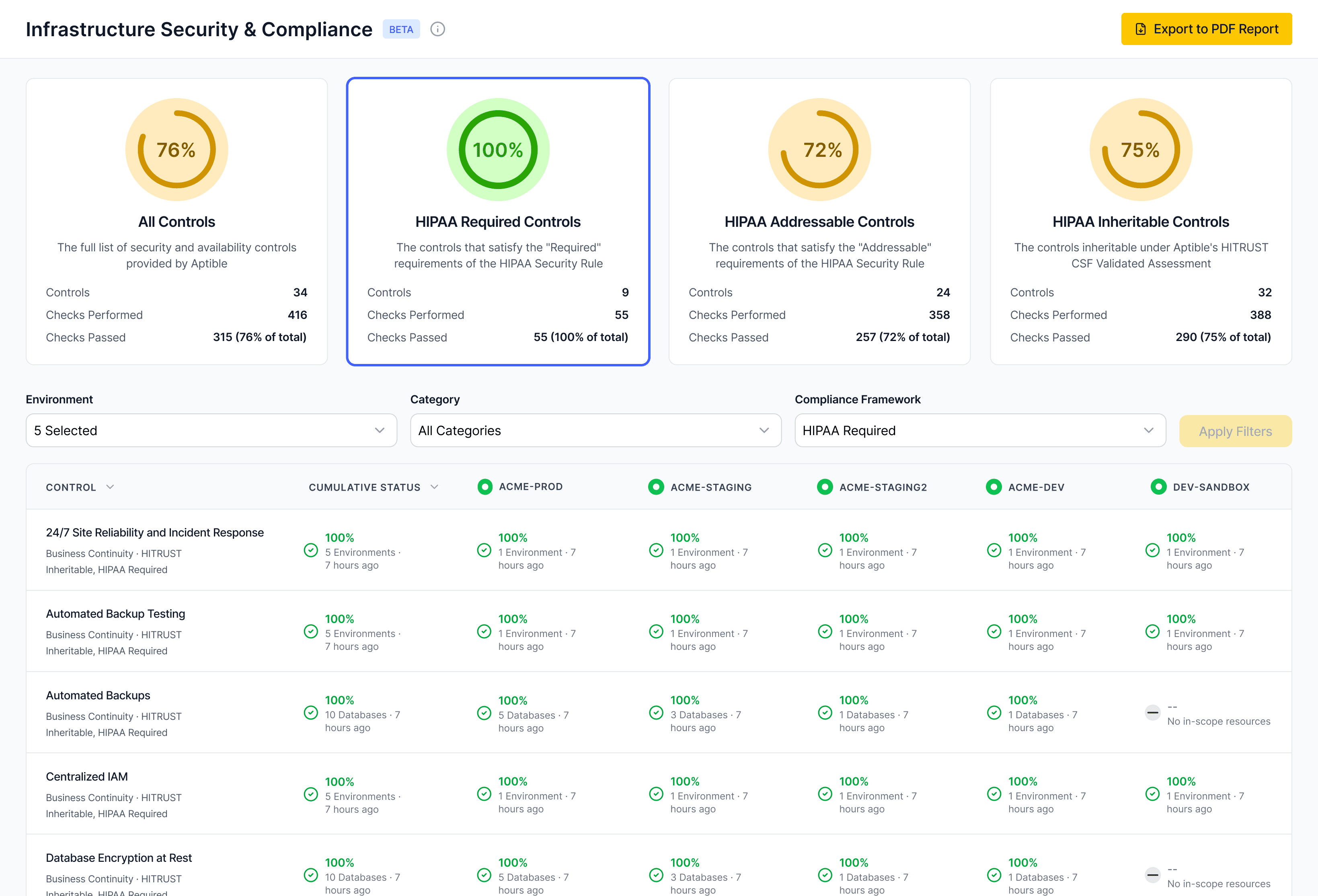
Every safeguard is optional by default

When you deploy on Heroku, Render, or a bare AWS account, compliance controls aren't enforced: they're available. Encryption, isolation, audit logging, and access controls are all things you can configure correctly. None of them are configured for you. When you're moving fast, optional becomes deferred, and nothing in the platform flags what you've skipped.

Every safeguard is optional by default

When you deploy on Heroku, Render, or a bare AWS account, compliance controls aren't enforced: they're available. Encryption, isolation, audit logging, and access controls are all things you can configure correctly. None of them are configured for you. When you're moving fast, optional becomes deferred, and nothing in the platform flags what you've skipped.

The consequences of early decisions arrive much later

The infrastructure choices you make while building your MVP are the ones an auditor or enterprise buyer will ask about 12 to 18 months later. By then, those decisions are in production, load-bearing, and harder to change. Most teams don't recognize the gap until they're in the middle of a deal or responding to an audit.

The consequences of early decisions arrive much later

The infrastructure choices you make while building your MVP are the ones an auditor or enterprise buyer will ask about 12 to 18 months later. By then, those decisions are in production, load-bearing, and harder to change. Most teams don't recognize the gap until they're in the middle of a deal or responding to an audit.

Compliance work doesn't make it on the roadmap until external pressure forces it

There's no sprint for "add proper audit logging" or "enforce least-privilege access." Founders prioritize shipping. Compliance work gets deferred until a buyer questionnaire, a new customer requirement, or an audit creates urgency. At that point, fixing it costs significantly more than building it correctly from the start.

Compliance work doesn't make it on the roadmap until external pressure forces it

There's no sprint for "add proper audit logging" or "enforce least-privilege access." Founders prioritize shipping. Compliance work gets deferred until a buyer questionnaire, a new customer requirement, or an audit creates urgency. At that point, fixing it costs significantly more than building it correctly from the start.

Use Cases

How founders use Aptible

Use Cases

How founders use Aptible

Get to production with your first healthcare customer

Deploy on infrastructure that already meets HIPAA technical requirements. No need to design networking, encryption, or access controls before you can start handling PHI.

Answer the security questionnaire that just arrived

Pull audit logs, access records, and infrastructure documentation directly from the platform. Clean, attributable answers. No reconstruction required.

Bring on engineers without losing compliance continuity

New team members deploy and operate within the same controls that were in place from the start. Compliance posture doesn't degrade as the team grows.

Add AI to your product without opening new compliance exposure

Route LLM requests through Aptible AI Gateway to keep PHI inside controlled infrastructure boundaries. Logging and PHI guardrails are enforced automatically.

aptible vs aws diy

What changes when the platform handles the safeguards

The difference between deploying on a general-purpose platform and deploying on Aptible is who owns the compliance foundation, and what happens when a buyer or auditor asks about it.

On heroku or render

Dedicated infrastructure, shared-nothing isolation by default

Isolation available as an add-on, not enforced by default

BAA paired with enforced infrastructure-layer controls

BAA available, but infrastructure controls are your responsibility

Controls enforced at the infrastructure layer

Compliance is manual work layered on top of deployment

Evidence available on demand

Security questionnaires require manual reconstruction

Controls hold as the team and system change

Compliance posture depends on every engineer doing the right thing

AI Gateway with logging and PHI controls built in

AI features require external tooling with no PHI guardrails

Keep shipping. Safety happens automatically.

Deploy in minutes.

Keep shipping. Safety happens automatically.

Deploy in minutes.